Technology List - Joint Development Technical information

Integrated production system from mould making and material development to moulding
We strive to plan and develop products that satisfy our customers.
If you have any concerns, please do not hesitate to contact us.
We will respond with sincerity to deliver high-quality products speedily.
Nanbu Kasei Co., Ltd.'s
Joint Development
Three Features
01
Turning Your Ideas into Reality with an Integrated System
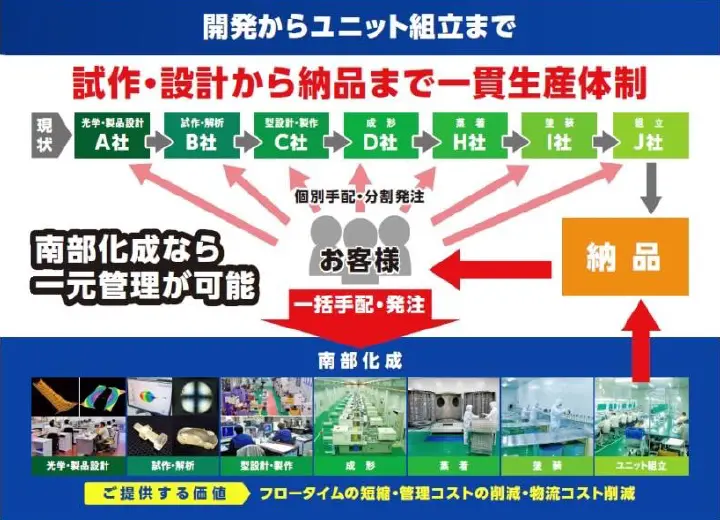
We can collaborate with you from the idea and concept stages. While strictly protecting your confidentiality, we will bring together in-house and external technical expertise from product design to mass production to realise your ideas and concepts as products. We are always attentive to your challenges and market needs, and by giving form to the formless, we provide satisfaction through our products.
02
Solving Customer Challenges with New Methods
We solve customer challenges through collaboration from the stage of considering and verifying the feasibility of new methods.
For example, we actively engage in collaboration with customers to achieve what was previously thought impossible, such as insert moulding technology (a technology for integrally molding three-dimensional resin parts and functional films) to give three-dimensional decorative items sensing or lighting functions.
03
Contributing to Reduced Development Time for Customers
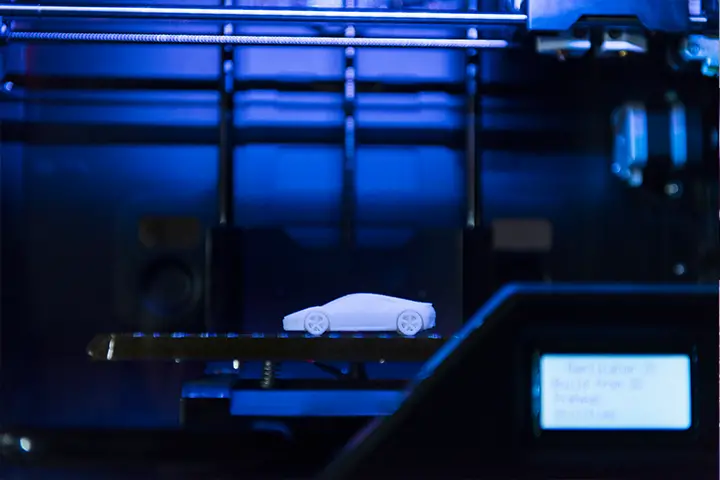
We contribute to reducing our customers' development time by collaborating from the early stages of product development.
For example, by creating master samples of micro-fine optical components through precision cutting before mould production, we contribute to reducing customer development time by enabling real-world verification at low cost and in a short period.
Technology List for Joint Development Technical list
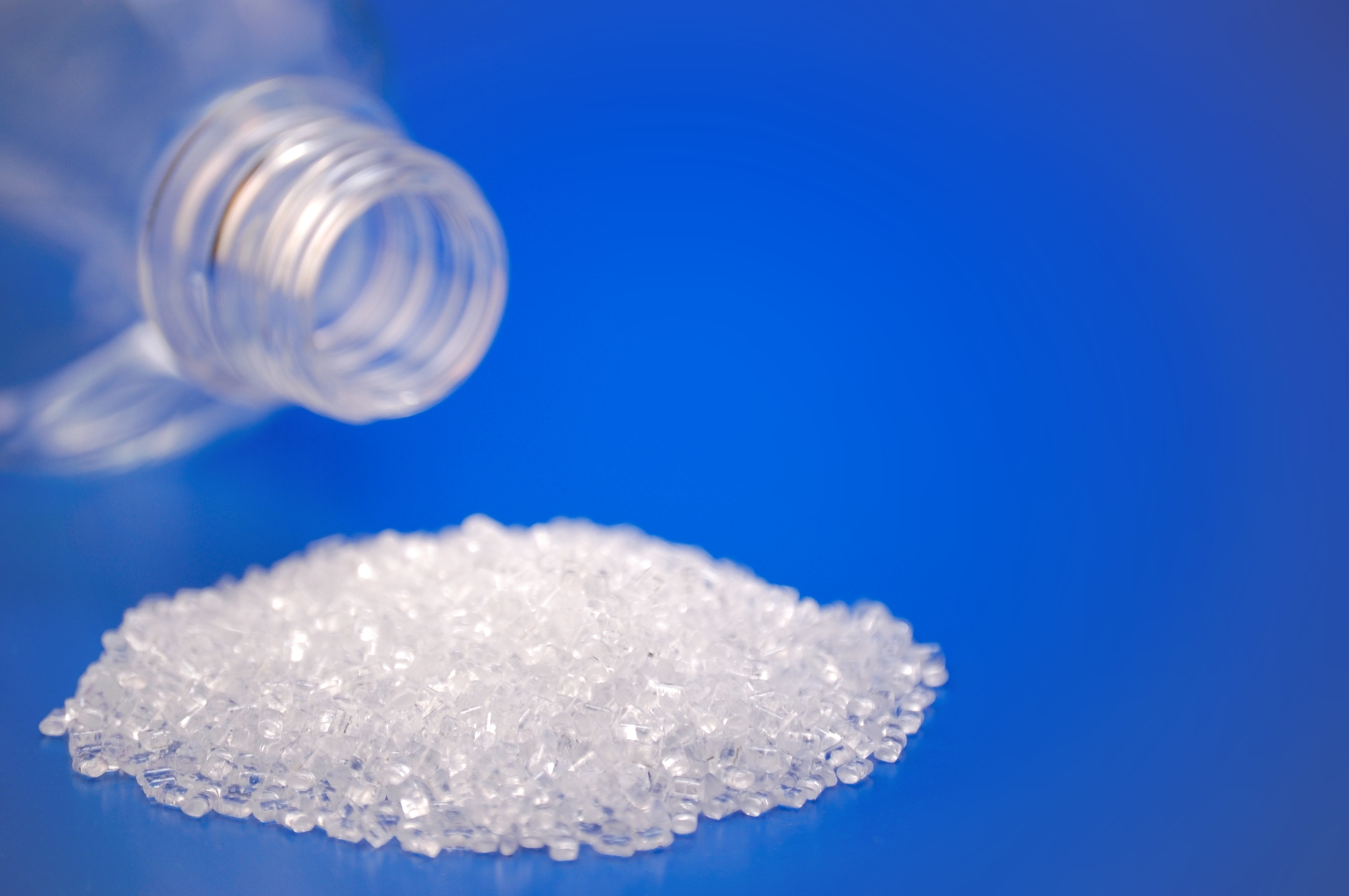
Super Engineering Plastic Injection Moulding
Super engineering plastics (hereinafter referred to as 'super resins') have significantly superior properties, such as heat resistance and chemical resistance, compared to generally used general-purpose resins. Our company has a track record of mass-producing medical products using super resins. * A general term for high-performance synthetic resins with heat resistance of approximately 151°C or higher, particularly excellent in heat resistance among engineering plastics.
View Details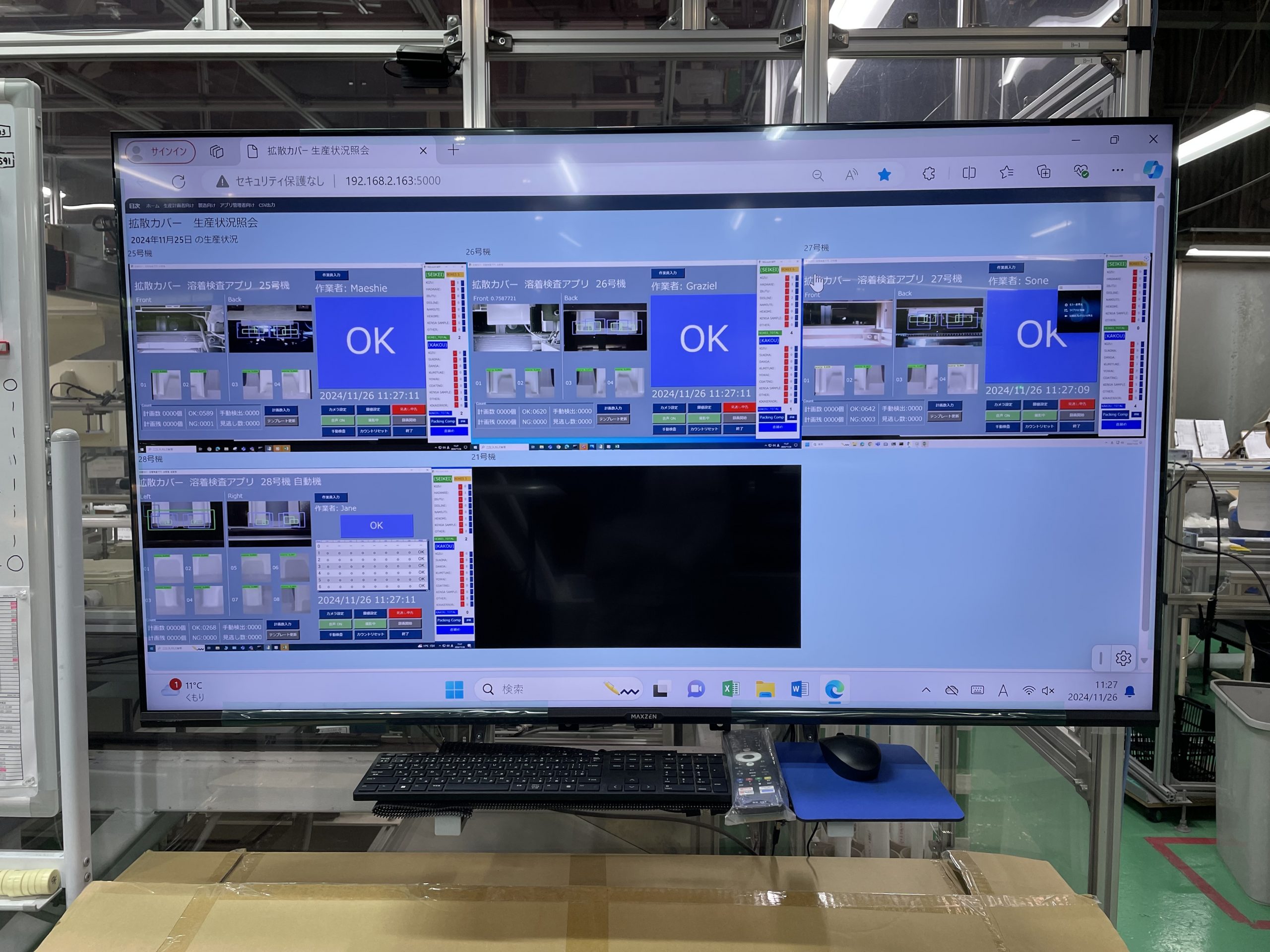
Product Inspection Technology using Image Recognition AI
We are transitioning the necessary inspections for detecting defects in product manufacturing from conventional human "visual inspection" to "automatic inspection using image recognition AI."
View Details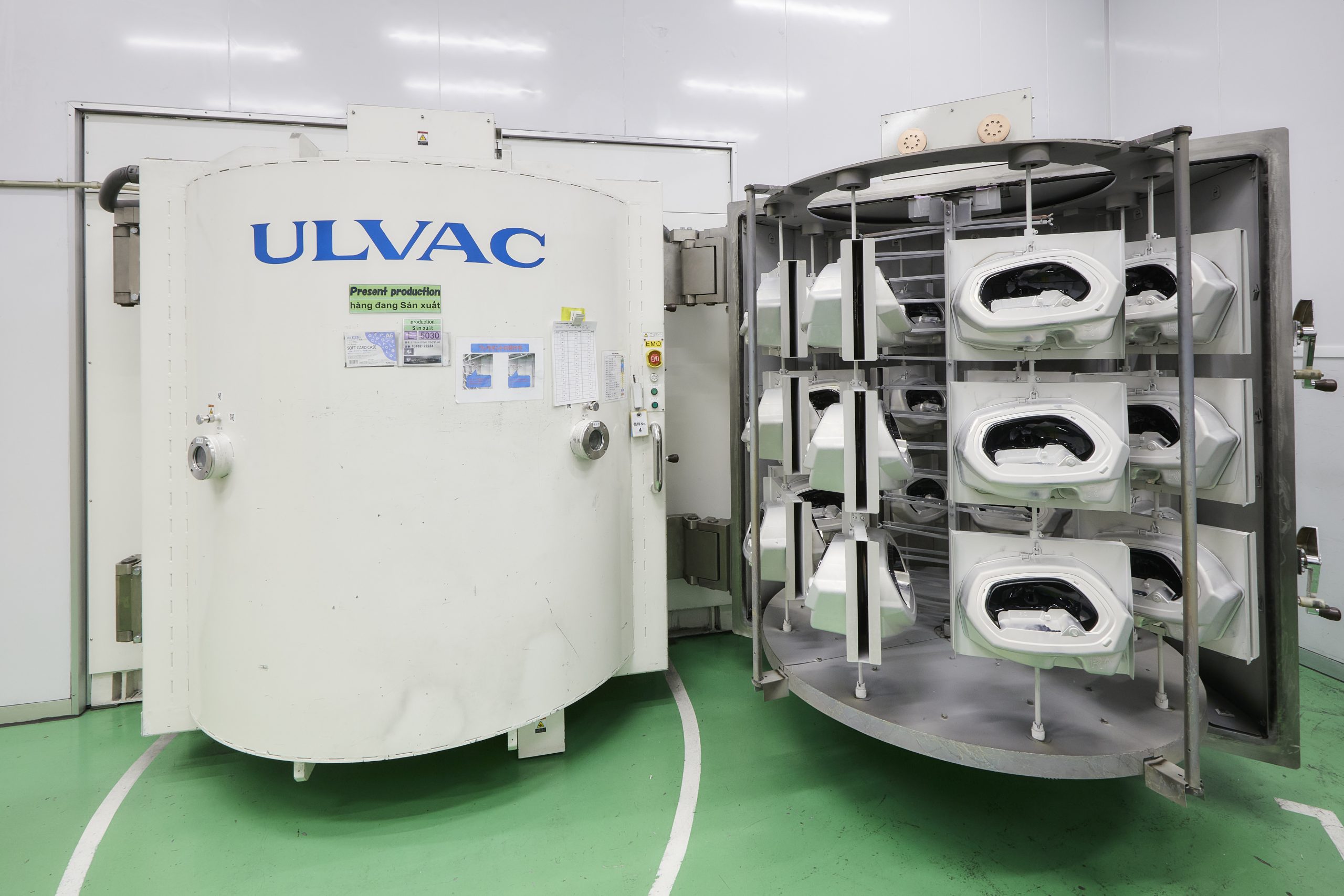
Vacuum Deposition Technology / Sputtering Technology
This is a processing technology where metal is evaporated in a vacuum and adhered to the surface of resin moulded products, etc., in a thin film. We primarily use aluminium.
View Details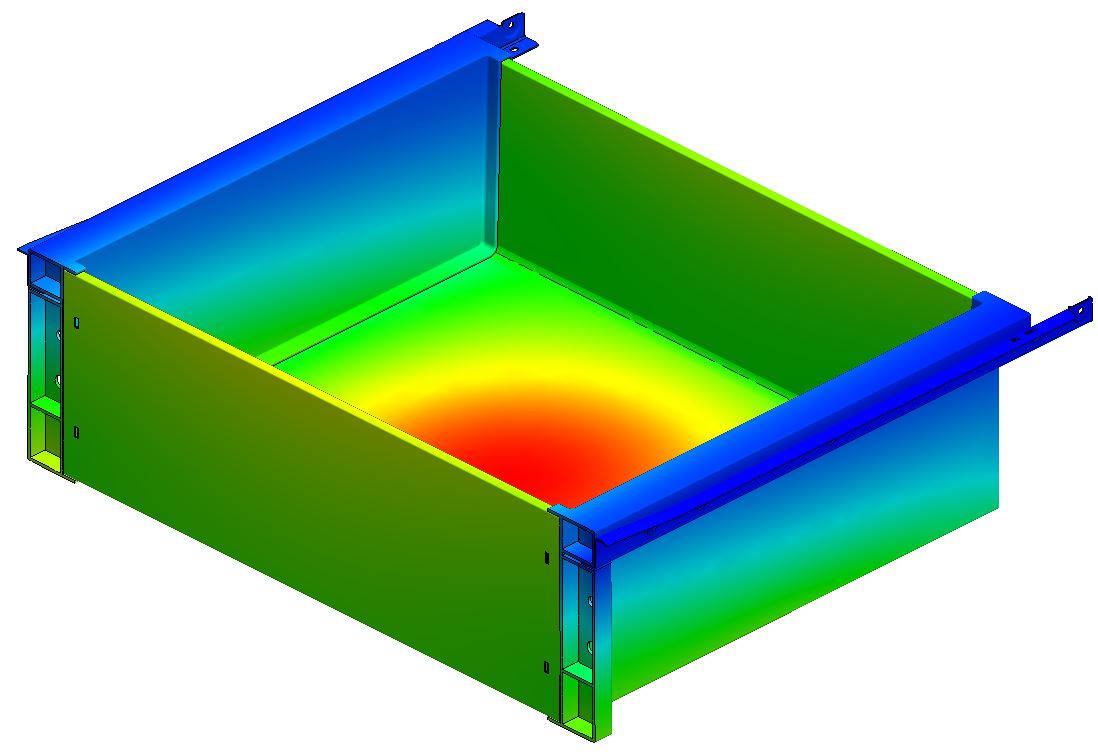
Technology for Considering Resin Conversion of Existing Products
Many challenges related to various products in various industries can be solved by replacing the material with resin. We provide solutions such as proposing resin materials and product shapes for replacement, and technical support.
View Details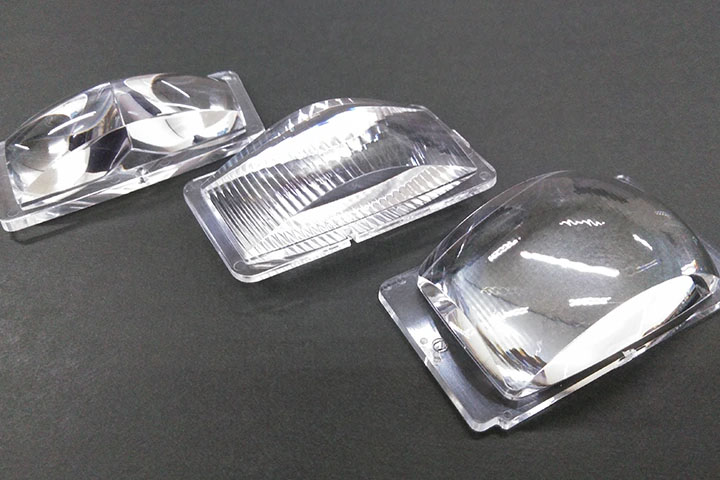
Optical Product Design and Manufacturing Technology
We have accumulated advanced technology and extensive experience through many years of involvement in the design and production of moulds for aspheric lenses for automotive headlamps. We incorporate our accumulated know-how into the shape data provided by our customers to propose high-precision, high-quality resin optical products.
View Details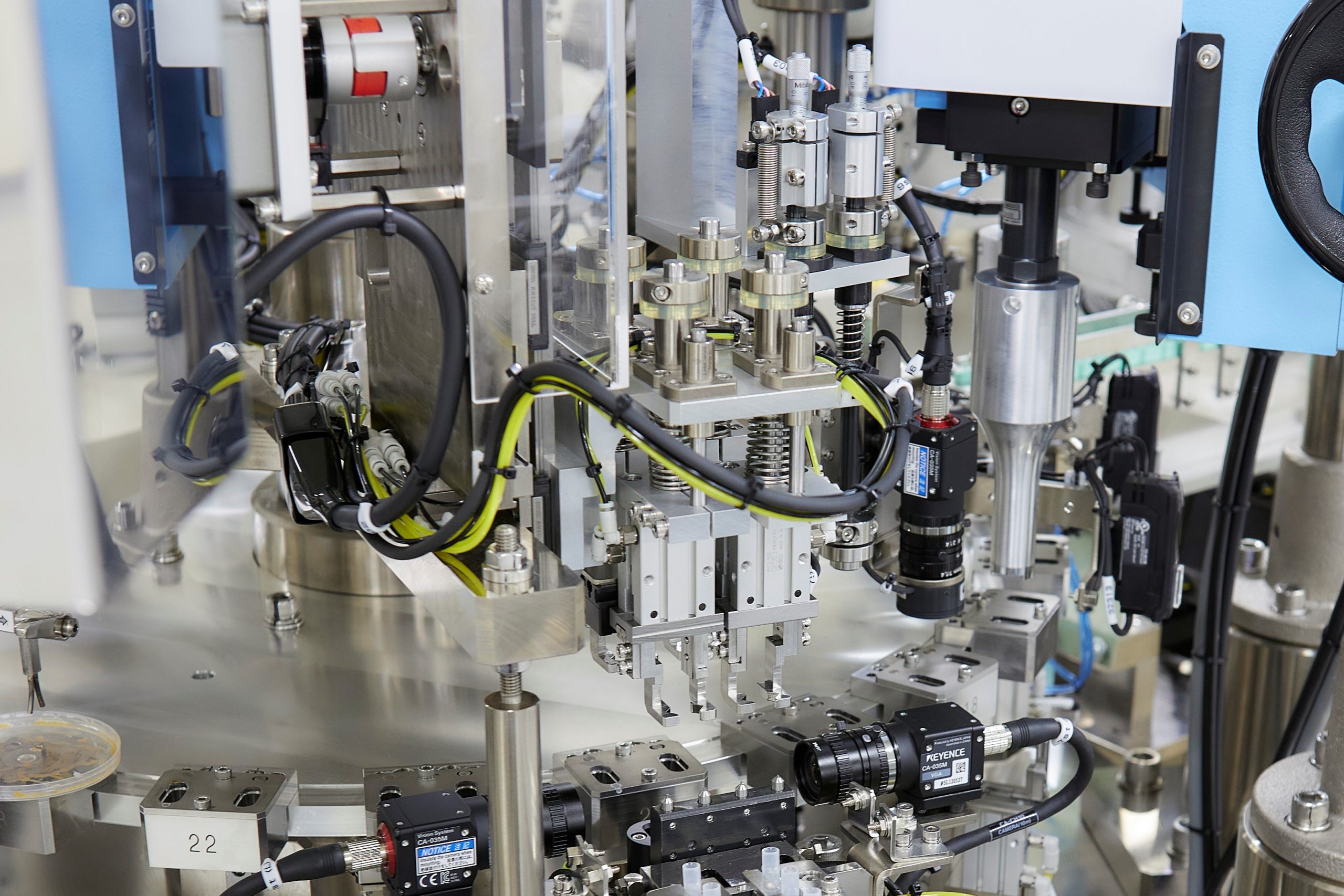
Liquid Filling Technology
We deliver products to our customers in a state where liquids are filled into containers of resin moulded products produced in-house, such as inspection kits for checking if foreign substances are mixed in collected samples, via an automated integrated line.
View Details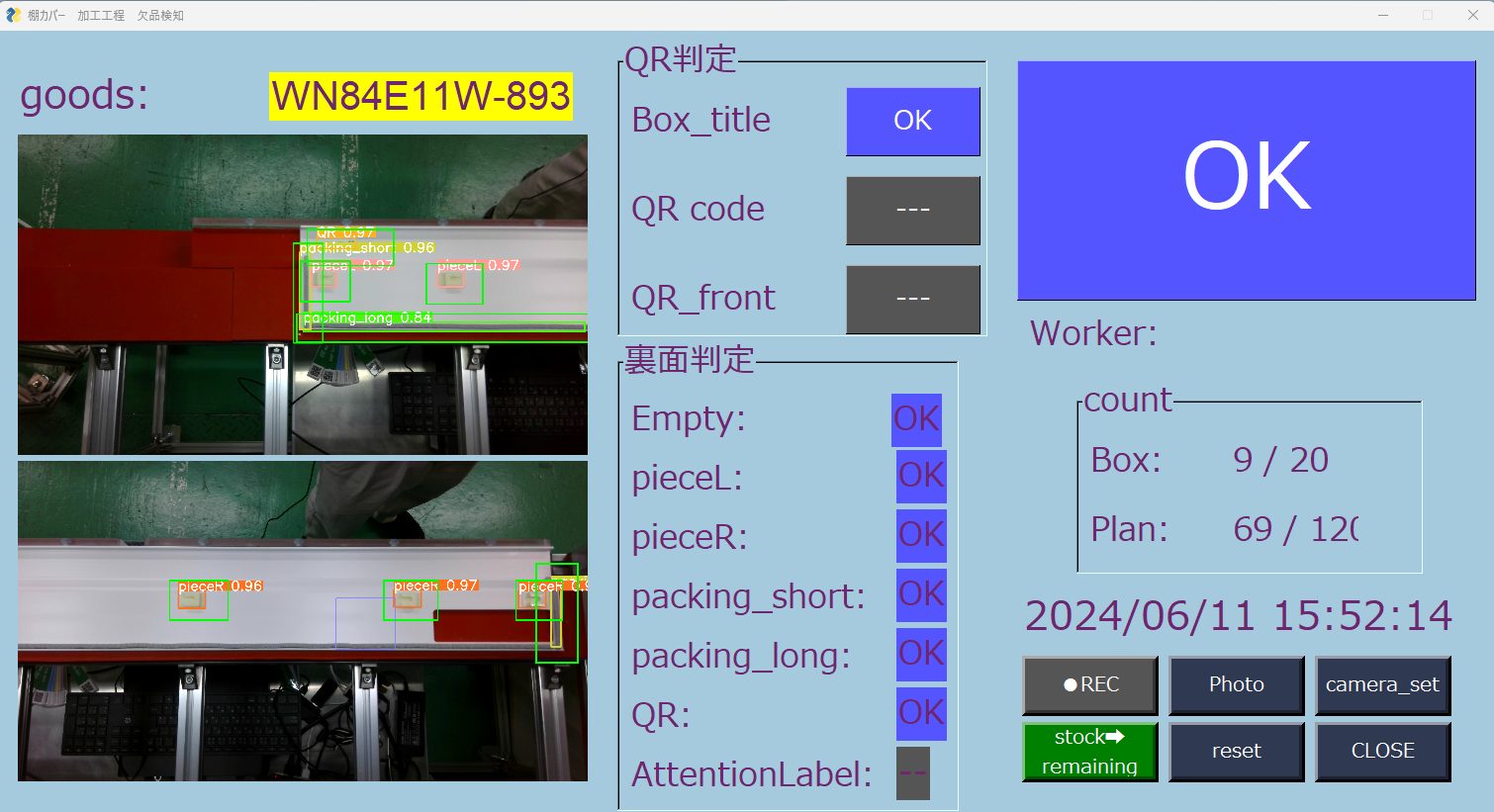
Promoting DX (Digital Transformation)
At our company, we are also promoting DX (Digital Transformation) in our product manufacturing processes. In particular, in the product inspection process, which has long relied on "human eyes" and "human hands," automation initiatives combining image recognition and AI (Artificial Intelligence) are rapidly progressing.
View Details
IM-E (Electronic Integration of Resin) Technology
By applying film insert moulding technology, we achieve environmental compatibility, space saving, labour saving, and cost reduction by integrally moulding electronic circuits, primarily FPCs (Flexible Printed Circuits), with resin.
View Details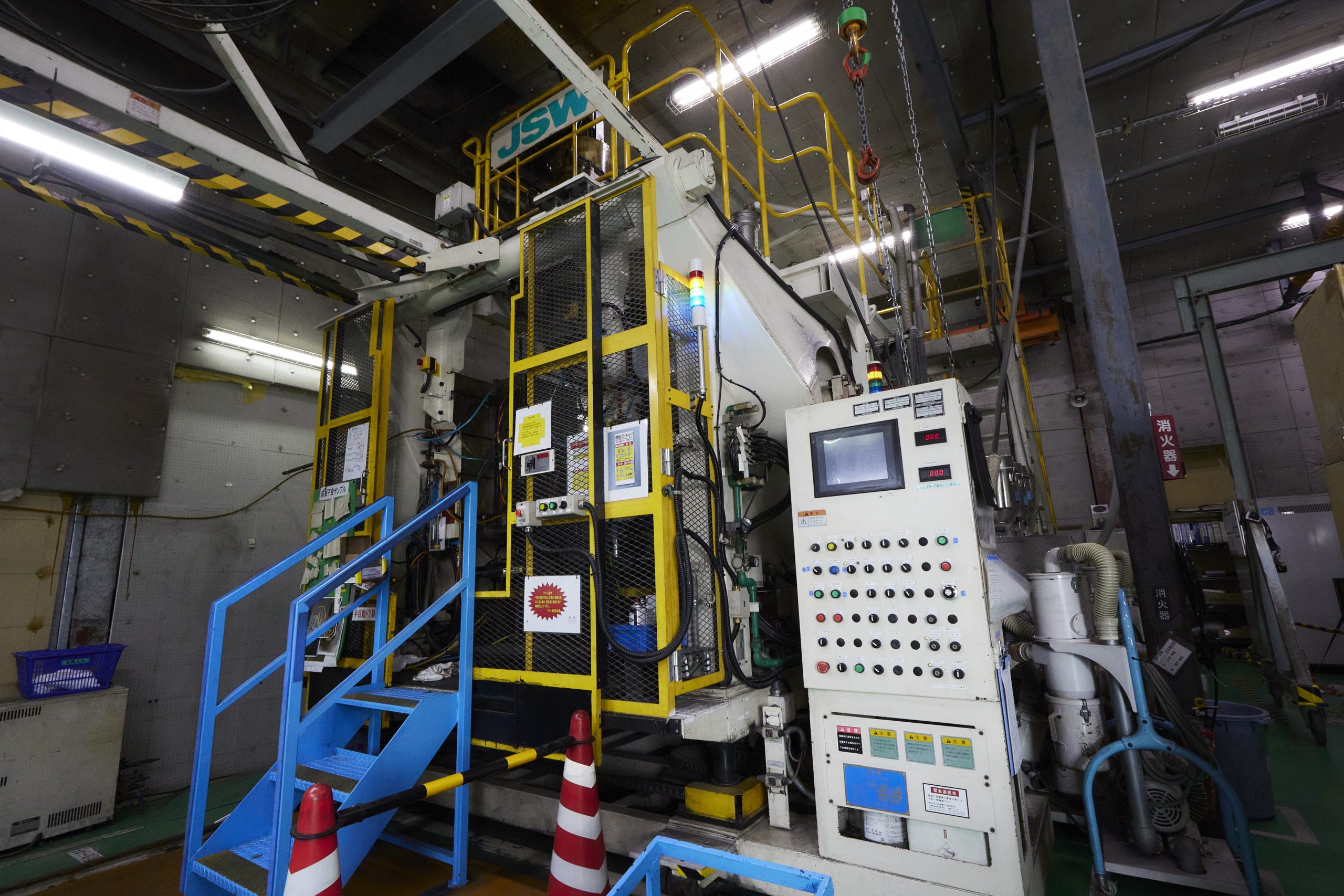
Large Blow Molding Technology
Large hollow moulded products can be manufactured using our large blow moulding machines.
View Details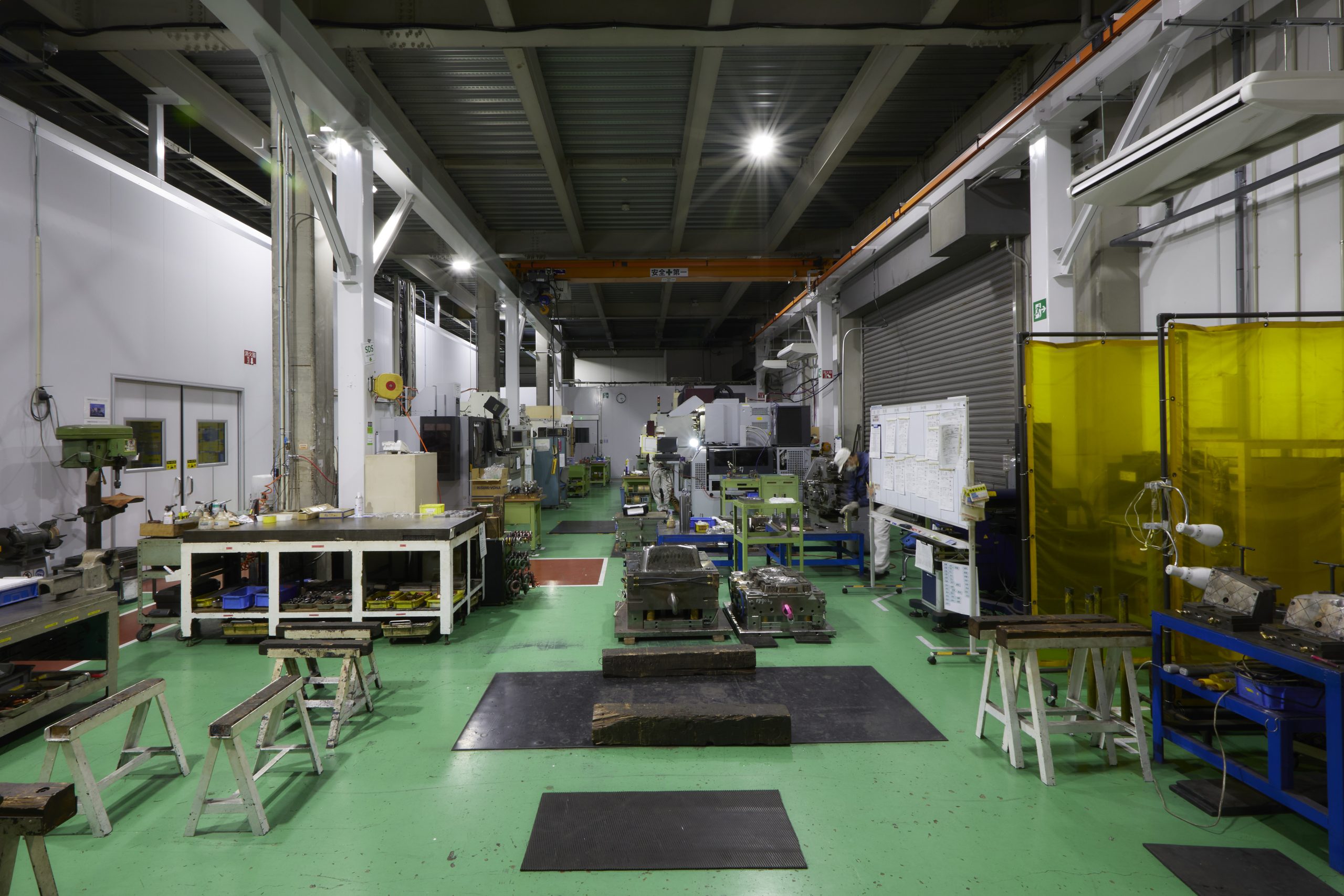
Mould design, manufacturing, and maintenance technology
We have the technology and equipment for mould design, manufacturing, and maintenance within the same premises as our in-house moulding factory. While pursuing the creation of higher-precision moulds, we achieve overall lead time reduction through speedy quality refinement, leveraging our location.
View DetailsNanbu Kasei Co., Ltd.'s
Joint Development Case Studies
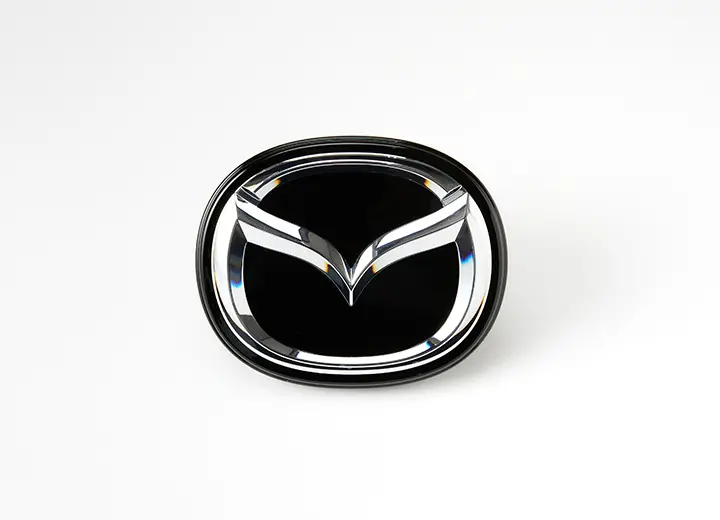
First Millimeter-Wave Radar Emblem using Metallic Film Insert Moulding
While decorative processing using metal plating and vapor deposition was common for logos and emblems that represent companies and products, we have worked with our customers to replace this with insert moulding using metallic film, with the goals of environmental compatibility, process reduction, and parts reduction. We have successfully completed and mass-produced the first automotive millimetre-wave radar emblem using metallic film insert moulding.
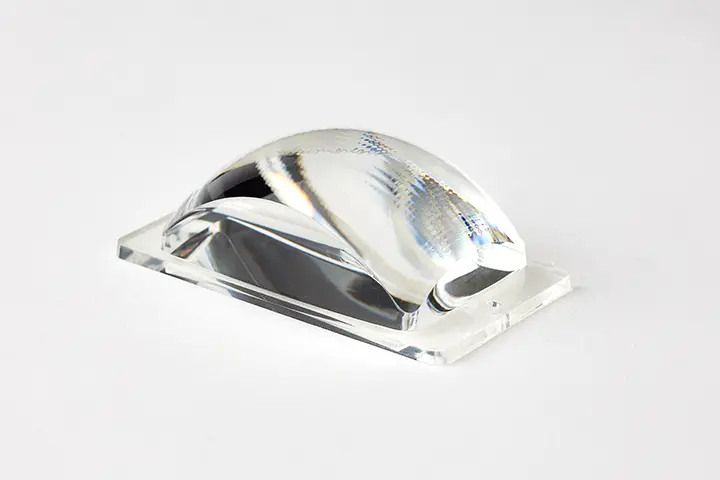
Aspheric lenses for automotive headlamps with microstructures (fine shapes)
Design data (3D models) for aspheric lenses with microstructures (fine shapes) have become very large, and it has become increasingly common for them to be unmanageable by CAM (Computer Aided Manufacturing) systems for processing. In response, we developed an original CAM system capable of handling large data volumes. Furthermore, there was also the challenge of processing machines being unable to handle the large NC data created by the CAM system, but we have resolved this by modifying the processing machines. This has enabled precise processing at a minimum level of 1 nanometre, realising the mass production of moulds and products for automotive headlamps with microstructures.
Frequently Asked Questions
Q
Who should I contact for joint development?
A
Please use the contact form or contact your local sales representative.
Please contact us via email or telephone through the contact section on our corporate website, or by contacting the sales representative at each of our business locations.
Q
What about confidentiality during joint development?
A
We will conclude a confidentiality agreement.
We undertake joint development after concluding a confidentiality agreement in advance.
Q
Is it possible to produce prototype moulds?
A
We can accommodate this.
We can produce prototype moulds. We will consult with you regarding your requirements for quality, specifications, budget, etc.
Q
What kind of development and production experience do you have with optical lenses?
A
We have extensive experience, starting with the automotive sector.
We have experience in the development and production of aspheric lenses (high beam/low beam/cornering) for automotive headlamps and fog lamps. We are currently also working on prototypes for automotive HUD (Head-Up Display) lenses and lenses for traffic infrastructure.
Q
What types of processing methods can you handle?
A
We can perform milling (cutting) and turning (lathing) processes.
Surface roughness (Ra) during milling (cutting) is 0.025μm (no polishing required)
Surface roughness (Ra) during turning (lathing) is 0.010μm (no polishing required)
We specialise in ultra-fine processing technology and produce aspheric lenses for automotive headlamps and fog lamps.
Q
Can you handle large design data (3D models)?
A
We can accommodate this.
We can handle it with our proprietary optical CAM (Computer Aided Manufacturing) system.
This software can handle large design data up to 10GB and create high-density NC machining data with pitches of 5μm or less.
It is also possible to convert point cloud data into NC data.
Q
With insert moulding, is it possible to shape any film?
A
We will do our best to meet your requirements.
It depends on the thickness of the film and the shape and size to be formed, but we will do our best to meet your requirements. Our achievements include resin films (PET/PC/PMMA) and real wood veneer sheets.